00:00 Prolog
02:25 181 BC
07:00 From Eastern Lands
08:47 Celtic Tribe
14:30 Histri
16:55 Ab Urbe Condita 41:1-5
24:00 Song for the Fallen
25:28 Old Life, New Life
27:13 Tergeste
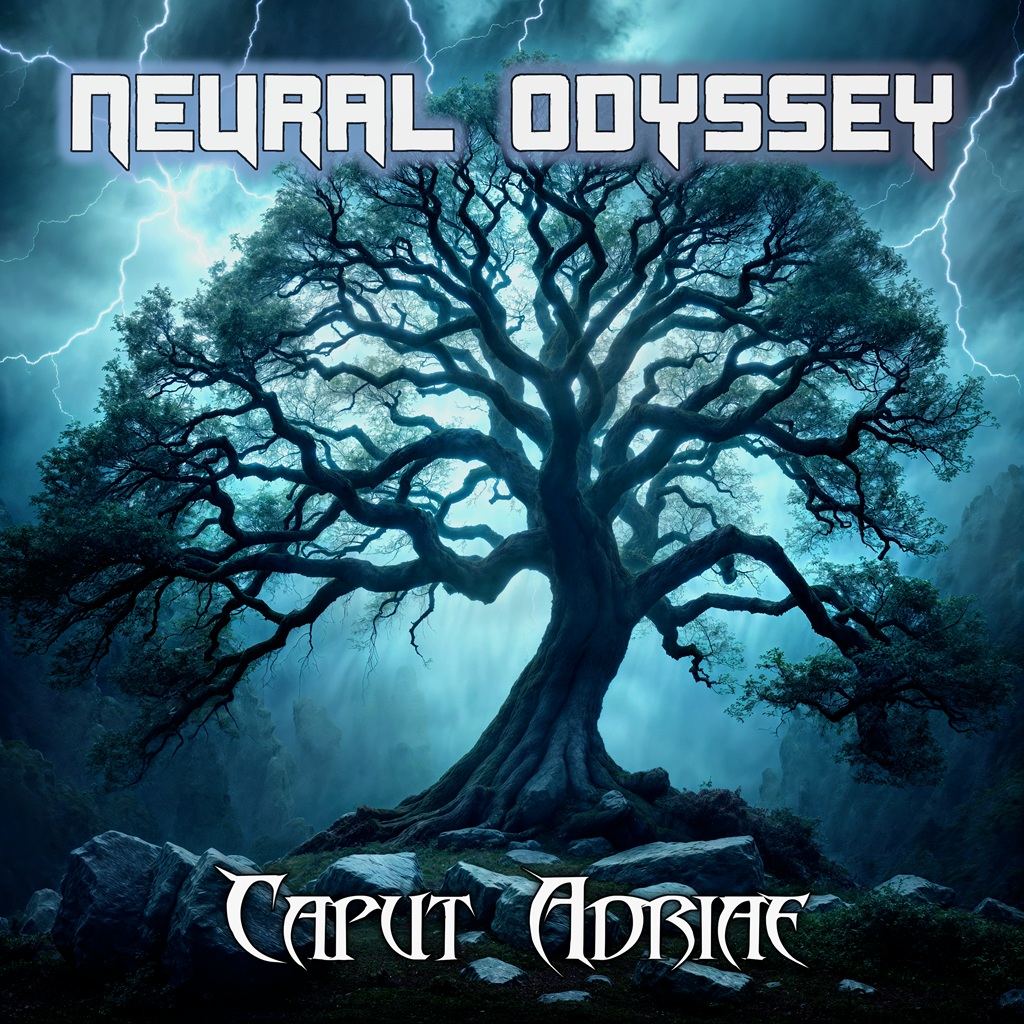
Caput Adriae is a suite lasting approximately 32 minutes, divided into nine sections and conceived as a musical journey through the events and transformations that form the backdrop to the origins of Tergeste.
The story begins in 181 BC, with the foundation of the Roman colony of Aquileia, and moves across the northeastern Upper Adriatic, a land inhabited and contested by different peoples: Romans, Carni and Histri. A few years later, this region would become the setting of the Second Histrian War, whose events are recounted by Livy in Book XLI of Ab Urbe Condita.
Caput Adriae, however, does not claim to offer a definitive chronological reconstruction of the foundation of Trieste. Classical sources have left us only fragments: Strabo preserves the memory of a Tergeste described as a Carnic village, while the precise relationship between this settlement, the Carni, Roman expansion and the later city of Tergeste is far more difficult to reconstruct.
The suite deliberately moves through the space between documented history and narrative reconstruction. Attested events provide the framework upon which the music builds a possible human journey made of migrations, encounters, battles and, ultimately, the birth of something new.
Classical music, cinematic orchestrations, choirs, power metal and symphonic metal accompany this story until the final section, when everything converges on a single name: Tergeste.
Prolog | 00:00
The suite opens with a classical orchestration that gradually increases in intensity, becoming increasingly solemn and epic. Before introducing the protagonists of the story, the music establishes the geographical and historical setting in which the narrative will unfold: the northeasternmost edge of the Adriatic at the beginning of the 2nd century BC.
The crescendo eventually gives way to the narrator’s voice.
In the year 181 before Christ
At the mouth of two rivers, a land to settle
Omens and auspices guide the sending
Of Roman colonists to this distant realm
It is 181 BC. Rome is preparing to establish a new settlement destined to become one of the most important centres of the Upper Adriatic. Omens and auspices accompany the dispatch of colonists to this distant land.
Its name is Aquileia.
181 BC | 02:25
(Verse 1)
From the Eternal City, they would depart
Legions and settlers with visions unbarred
To raise a new outpost from barren earth
A trading hub of invaluable worth
(Chorus)
Aquileia will rise, an outpost of Rome
On the borders of the Empire, a millennial fortress
Strategic crossroads of commerce and might
Challenging the seas, defying the night
(Verse 2)
From the bowels of earth, mighty walls arise
Roads and aqueducts traverse the city
Exalted buildings of marble and stone
The fifth colony destined for an eminent future
(Chorus)
Aquileia will rise, an outpost of Rome
On the borders of the Empire, a millennial fortress
Strategic crossroads of commerce and might
Challenging the seas, defying the night
(Bridge)
Aquileia colonia Latina eodem anno in agrum Gallorum est deducta
(Chorus)
Aquileia will rise, an outpost of Rome
On the borders of the Empire, a millennial fortress
Strategic crossroads of commerce and might
Challenging the seas, defying the night
(Outro)
Aquileia will rise, an outpost of Rome
Challenging the seas, defying the night
Aquileia colonia Latina eodem anno in agrum Gallorum est deducta
A female voice tells of the departure of colonists and soldiers and the birth of the new city. Aquileia is founded as a Latin colony in 181 BC, in a territory that Roman sources associate with the Gauls.
Its location is anything but accidental. Important connections between the Adriatic and the territories of Central Europe pass through this area, along trade routes that would also become associated with the famous Amber Road.
The song deliberately looks beyond the moment of its foundation, anticipating the enormous importance Aquileia would acquire over the following centuries as a commercial, logistical and strategic centre for Rome.
At the heart of the song appears a passage from Livy:
Aquileia colonia Latina eodem anno in agrum Gallorum est deducta.
“Aquileia, a Latin colony, was founded that same year in the territory of the Gauls.”
From Eastern Lands | 07:00
From Eastern Lands is an instrumental symphonic metal piece built around the feeling of a restless, energetic march. The music evokes the arrival of the Carni from the eastern Alpine world, their presence in the Noric area and their movement towards the plains and territories of present day Friuli.
This represents a very broad, long term historical process, condensed musically into this section.
The Carni were a Celtic people settled in the eastern Alps and northeastern Italy before Rome consolidated its control over the region. Even their name may preserve a connection with this mountainous environment. According to one etymological hypothesis, Carni may derive from karn-, a root associated with stone, rock or rocky heights.
Such a name would fit well with a people settled predominantly in mountainous and rocky territories, who would have found the hilltop castellieri of the Upper Adriatic a particularly suitable environment.
Celtic Tribe | 08:47
(Intro)
In a realm where peaks pierce the sky
And forests yearn for sacred rites
The Carni warriors made their stand
(Verse 1)
Down from the eastern mountains
Skilled craftsmen and warriors bands
Bearing druidic mysteries arcane
To consecrate this unspoiled strand
(Pre-Chorus)
Amidst stone circles raising their creed
(Last keepers of the old way’s lore)
(Chorus)
Celtic tribe whose warband fame arose
From alpine mists their spirit grows
Guardians of the ancient mystic way
Their legend resounds to this day
(Verse 2)
Deep in the forest glades they would gather
The hallowed mistletoe adorning them
Around the standing stones raising their creed
Keepers of ancient lore’s mystic gem
(Pre-Chorus)
Amidst stone circles raising their creed
(Ancient guardians of the druidic lore)
(Chorus)
Celtic tribe whose warband fame arose
From alpine mists their spirit grows
Guardians of the ancient mystic way
Their legend resounds to this day
Celtic tribe whose warband fame arose
From alpine mists their spirit grows
Guardians of the ancient mystic way
Their legend resounds to this day
(Outro)
Yet from the eastern winds a chill forebode
The coming of a storm their pride to goad
The symphonic metal foundation takes on a broader and more triumphant character, accompanied by soprano vocals and choirs. The lyrics evoke warriors, craftsmen, forests, rituals and the relationship between the community and its land.
Some elements deliberately belong to the imagery of the wider Celtic world and should not be interpreted as a literal reconstruction of Carnic society. This is an important concept for understanding the entire suite, in which music is also used to evoke a cultural world of which only fragments have survived.
Towards the end, however, the atmosphere changes.
Something is coming…
Histri | 14:30
Histri, gentes ferae et magna ex parte latrociniis
Romanus miles, Gallica feram auxilia
Adversus Histrorum saevam audaciam
The music becomes choral, dark, sinister and cinematic. Latin words emerge from the orchestration, introducing this people through the perspective of Roman sources.
Roman authors frequently describe the Histri using the language of violence, raids and piracy, and the piece thus becomes a portrait of the way the enemy is represented within the Roman narrative.
The Upper Adriatic is no longer merely a land of encounters. It is about to become a battlefield.
Ab Urbe Condita 41:1–5 | 16:55
(Verse 1)
From the waves of the vast sea
Came the lords of Rome
With fierce Celtic Carni
By their side to bend a defiant people
Riding winds and currents
The legions landed
On these shores of battle
Where the enemy was lurking
Clashes of swords and shields
Rang through the hills
(Chorus)
Bulwarks of glory we raised
On the peaks to challenge the skies
Against the pirates of the bitter wave
(Verse 2)
A bitter clash too harsh by farthem
Numbers e’er foretold
The tribune fell, his men as well
To foe’s blades cruel and hone
The eagle’s grace torn
Chief’s tent has defiled
Our camps they plundered
In this way desploied
(Chorus)
Bulwarks fell to barbarian hordes
Like a furious tide
Our glory was engulfed by bitter waves
(Verse 3)
Tunc demum nuntius
Ad tertiam legionem
Revocandam et Gallorum praesidium
Et simul ex omnibus locis
Ad castra recipienda demendamque
Ignominiam rediri coeptum est
(Chorus)
Bulwarks of glory we raised
On the peaks to challenge the skies
Against the pirates of the bitter wave
The title refers directly to Book XLI of Livy’s Ab Urbe Condita, whose opening chapters recount the Roman campaign against the Histri in 178 BC.
The music returns to epic symphonic metal and this time the narrative directly follows an episode preserved by a classical source. Roman forces enter Histrian territory, but the campaign does not proceed as expected.
The Histri suddenly attack the Roman camp. Confusion spreads among the soldiers, positions are abandoned, and what should have been another demonstration of Roman military power turns into a humiliating defeat. The camp is plundered and even symbols of Roman authority fall into enemy hands.
The Third Legion and the contingent of Gauls are recalled. The soldiers must return to the camp.
The purpose is encapsulated in just a few words: demendamque ignominiam, to wipe away the disgrace. What initially represented Rome’s advance now becomes the determination to avenge a defeat.
The Second Histrian War would end in 177 BC with a Roman victory.
Caput Adriae, however, chooses not to celebrate that victory but instead to focus on the consequences of war.
Song for the Fallen | 24:00
Song for the Fallen is a classical, melancholic and contemplative composition, accompanied by choirs and an ethereal voice.
Here there are only the fallen, with no distinction between peoples.
The historical narrative is deliberately suspended and the suite focuses on the simplest and most universal consequence of war: men who will never return home.
It is a musical elegy dedicated also to all those whose names History has not preserved.
Old Life, New Life | 25:28
Life’s unending circle spins
Seasons ebb and flow
Petals fall, then grow again
Every end, a new begin
Departures and returns
Petals fall, then grow again
Then grow again
Always again…
A voice appears, initially with an adolescent quality, almost as if it belonged to someone at the beginning of their life. As the piece progresses, that same voice grows and matures.
It is the musical representation of the passage of time.
The seasons pass. One generation disappears and another takes its place. Wars that once determined the fate of entire communities slowly become memories.
The lyrics revolve around an extremely simple image: the petals fall and then grow again, life continues through endings and new beginnings, and it is from this constant renewal that the title emerges: Old Life, New Life.
The melody does not end with this section. It continues to evolve towards something new.
Tergeste | 27:13
(Intro)
The wind blows through the Karst’s folds
Echoing the end of the strife
When a warrior people
Put down roots on these heights
(Verse 1)
Gazed at limestone hills white
Founded realm on heights
Free village built, tilled land
Weaving harsh land’s promised fate
(Verse 2)
Merchants, craftmen, thinkers
Jewel set in Karst’s stones
Carni forged tomorrow’s thread
With strong arms and ardent hearts
(Chorus)
Red earth sparked indomitable flames
Fierce guard against dark seas
Where light will shine eternally
For the eternity
(Verse 3)
Carnic folk raised a hamlet highland
Where the pass to Lougeon lay
Skilled artisans forged treasures
While rites to the earth did pray
(Verse 4)
Rugged landscape’s demesne
They drew wisdom from nature’s vein
Hands calloused, yet spirits unchained
In harmonious dance with their life
(Chorus)
Red earth sparked indomitable flames
Fierce guard against dark seas
Where light will shine eternally
For the eternity
(Outro)
ὁμοίως δὲ καὶ ἐκ Τεργέστε κώμης
Καρνικῆς ὑπέρθεσίς ἐστι διὰ τῆς
Ὄκρας εἰς ἕλος Λούγεον καλούμενον
The melody of Old Life, New Life returns, but it has changed.
The intimate theme that represented the passing of generations becomes larger, more powerful and more epic. What previously belonged to the cycle of individual life now becomes the musical theme of a community.
This is the birth of Tergeste within the narrative: the symbolic emergence of something new from the transformations that reshaped the Upper Adriatic during Roman expansion.
The lyrics imagine a community taking root on the limestone heights of the Karst, where people and families build, work and cultivate a difficult land.
In this sense, the Tergeste of Caput Adriae metaphorically rises from the ashes of the Histrian War.
It is precisely here that the narrative reconstruction of the suite moves towards a suggestion: that some of the Gauls involved in the military events of those years might be ideally connected with the Carnic presence that the sources would later place at Tergeste.
There is, in fact, a particularly evocative ancient testimony: as the music reaches its epic and cinematic finale, a voice recites the words of Strabo in Greek, in which Tergeste is remembered as a κώμη Καρνική, a “Carnic village”.
After thirty two minutes in which Rome, Aquileia, the Carni and the Histri have entered and left the narrative, the suite does not end with a victorious army. It ends with a name:
TERGESTE